


A Miami dog beach day can be fantastic exercise and enrichment, but “dog-friendly” does not mean rule-free or risk-free. The safer routine is simple: confirm that dogs are allowed where you are going, check current water conditions, arrive with fresh drinking water and shade, keep control around other dogs and beachgoers, and leave before heat, fatigue, or rough surf turns a fun outing into a problem.
This guide focuses on the local decisions that matter most in Miami and Miami-Dade. For a broader look at swimming ability, life jackets, pools, lakes, and algae, use our dog water safety in Florida guide.
First question: is your dog actually allowed on that part of the beach?
Do not assume that seeing another dog on the sand means dogs are permitted there. Rules can change by city, park, beach segment, time of day, season, and posted conditions.
At Haulover Park, Miami-Dade County currently says dog beach access is available daily from sunrise to sunset only in the designated area between lifeguard towers #2 and #3. Dogs must be leashed outside that designated beach area. The county’s posted dog-beach rules also limit access to two dogs per person, prohibit puppies under six months, require owners to monitor and control their dogs, and require cleanup after them.
Miami Beach operates separate designated Bark Beach areas with its own seasonal schedules and rules. Its current parks page requires dogs to stay within the designated beach area, requires owners to carry a leash, limits each owner to two dogs, requires a collar and rabies tag, and excludes aggressive dogs, females in heat, and dogs that are not current on required vaccines.
The practical takeaway is more important than memorizing one schedule: check the official page for the exact beach you plan to use on the same day you go, then follow posted signs when you arrive.
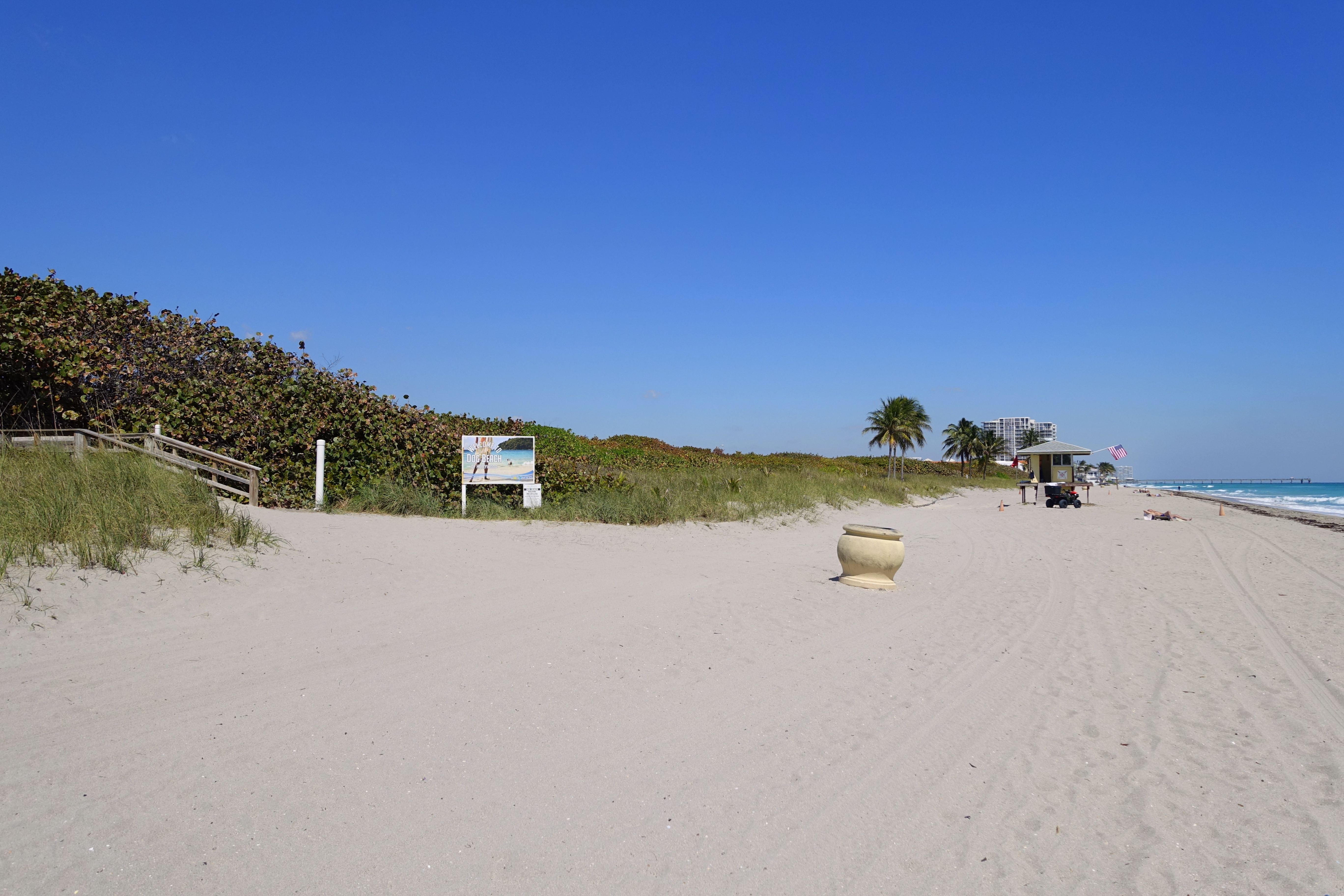
Dog access is location-specific. Follow the current park page and posted signs rather than assuming every stretch of beach follows the same rules.
Photo by DaderotSource: Wikimedia Commons
Check water quality before your dog goes in
Ocean water can look perfectly normal while a health advisory is active.
The Florida Department of Health’s Healthy Beaches program routinely monitors fecal indicator bacteria at coastal sampling sites and publishes results and advisories. In July 2026, DOH-Miami-Dade issued an advisory that included Bark Beach at 79th Street, then lifted it several days later after subsequent testing showed acceptable levels. That is a good reminder that beach conditions are dynamic rather than something to check once per season.
Before leaving home, look at the current Florida beach-water results for the area you plan to visit. If an advisory says to avoid water-related activities, treat that as a reason to postpone swimming rather than trying to judge safety by color, smell, or how many other people are in the water.
This is also one reason not to let a dog roam far ahead at the shoreline. Close supervision makes it easier to respond to posted warnings, floating debris, fishing gear, jellyfish, rough water, or a sudden change in conditions.
Bring fresh water so the ocean never becomes the water bowl
Dogs playing fetch or chasing waves can swallow seawater incidentally. A few accidental mouthfuls may cause stomach upset, while larger salt-water intake can become much more serious.
The American Kennel Club notes that excessive salt-water ingestion can lead to salt-water toxicosis and lists signs such as vomiting, diarrhea, weakness, and seizures. A dog showing unusual behavior or illness after heavy seawater exposure needs prompt veterinary guidance.
Prevention is easier than trying to estimate how much ocean water a dog swallowed. Bring more fresh water than you expect to use, offer it regularly, and interrupt repeated attempts to drink directly from the ocean.
A collapsible or portable bowl can help, but the product matters less than the routine: fresh water should be easy to access before the dog becomes intensely thirsty.
For Miami-specific hydration planning, see our dog hydration in Miami heat guide.
Treat the beach as a heat-exposure environment
The ocean breeze can make the beach feel cooler to a person while a dog is still dealing with direct sun, warm humid air, physical exertion, and hot sand or pavement between the car and the shoreline.
Plan around the individual dog. Brachycephalic dogs, older dogs, puppies, overweight dogs, dogs with heart or respiratory disease, and dogs that are not conditioned for sustained activity may tolerate heat and exertion differently.
Build the outing around shade, fresh water, pauses, and an easy exit. If the dog is panting intensely, slowing down, seeking shade, refusing play, vomiting, appearing weak, or acting abnormally, end the activity and move to a cooler environment. Concerning heat-related signs warrant veterinary attention.
The trip from the parking lot matters too. Sun-exposed asphalt and concrete can be much hotter than the air. Our hot pavement guide for Miami dogs covers route timing and paw-surface decisions in more detail.
Off-leash permission is not the same as off-leash readiness
A designated off-leash beach can be more demanding than a fenced dog park. The shoreline is open, distractions move quickly, waves and birds can trigger chasing, and unfamiliar dogs may approach from multiple directions.
Before unclipping the leash, ask whether your dog can reliably:
- return when called around dogs, birds, food, and moving people;
- disengage from another dog when asked;
- stay within the legal dog area;
- avoid taking toys, food, or belongings from other groups;
- remain manageable when excited by waves or fetch;
- tolerate unfamiliar dogs without bullying, guarding, or panicking.
If the answer is no, keeping the dog leashed is not a failed beach trip. A controlled walk near the water can still provide sniffing, movement, novelty, and time together.
Long lines can be useful in some open environments, but they can also tangle around people, dogs, beach gear, or moving animals. Use equipment only where local rules allow it and where you can manage it safely.
Do not make swimming the price of admission
Not every dog is a natural or confident swimmer, and even capable swimmers can become fatigued in waves and currents.
Let a new beach dog approach the water voluntarily. Do not throw or carry a hesitant dog into deeper water to “teach” swimming. Start in shallow conditions, keep the first sessions short, and watch how the dog handles waves returning toward shore.
A properly fitted canine life jacket can add buoyancy and visibility for some dogs around deeper water, boats, docks, or uncertain swimming ability. But equipment is not a substitute for close supervision or a safe water decision.
If the surf looks rough for your dog, skip swimming. A beach walk is still a beach day.
Sand creates its own set of small problems
Beach sand gets everywhere: between toes, around nails, under harness straps, in ears, and on damp skin.
During the outing, discourage intentional sand eating. Dogs may swallow sand while grabbing sandy balls or repeatedly digging and mouthing the ground. After play, rinse salt and sand from the coat and paws with fresh water when facilities allow, then dry areas that stay damp or rub under equipment.
Check for:
- irritated paw pads or broken nails;
- cuts from shells, glass, fishing hooks, or other debris;
- sand packed between toes;
- skin rubbing under a wet harness or life jacket;
- eye irritation after wind or blowing sand;
- ear discomfort after swimming.
A quick check at the car can catch a problem before the ride home.
Choose toys with the environment in mind
The beach changes how toys behave. A toy that is easy to see on grass may disappear in surf. A damaged toy can break down faster after chewing, salt, heat, and sand exposure. Shared toys can also create conflict between unfamiliar dogs.
Bring only a small number of items you can track and retrieve. Choose a size that is appropriate for your dog and inspect toys before and after the outing. If your dog guards balls or becomes highly aroused around fetch, a crowded off-leash beach may not be the best place to use a favorite toy.
Our pet product safety guidance covers sizing, inspection, supervision, and replacement decisions that apply beyond the beach.
A practical Miami dog beach checklist
Before leaving home:
- verify that dogs are allowed at the exact beach and at the time you plan to visit;
- check the current Florida Healthy Beaches water-quality information;
- look at weather, heat, surf, and storm conditions;
- confirm your dog’s ID tag and required local documentation are current;
- pack fresh water, bowl, leash, waste bags, towel, and shade if the location does not provide it;
- bring only beach-safe toys and equipment you can supervise;
- know where the nearest veterinary or emergency veterinary facility is if you are traveling away from your normal area.
When you arrive:
- read the signs before entering the sand;
- keep the leash on until you are clearly inside an area where off-leash access is permitted;
- scan the water and shoreline for debris, fishing activity, rough surf, and posted advisories;
- give your dog a calm minute to take in the environment before high-energy play starts.
Before you leave:
- offer fresh water;
- rinse salt and sand when practical;
- check paws, nails, skin, ears, eyes, and equipment;
- stop for the day if your dog looks overheated, exhausted, nauseated, disoriented, or otherwise unwell.
The best dog beach day is the one you can leave early
A safe outing does not need to last until the dog is exhausted. Miami’s beach environment can combine excitement, heat, salt water, waves, unfamiliar dogs, and changing water conditions all at once.
If your dog has already had a good run, a swim, a drink, and some relaxed time with you, leaving while things are still going well is often the smarter choice.
Check the rules. Check the water. Bring fresh water. Keep control. Watch the dog in front of you. That simple routine does more for beach safety than any single piece of gear.
Sources & further reading
These references were used to support or expand the information in this article. External guidance can change over time, so check the linked source for the latest details.
- 1. Miami-Dade County. Haulover Park — Bark Park and Beach Access for Dogs — accessed Sep 6, 2026
- 2. Miami-Dade County. Haulover Beach Dog Beach Access Rules — accessed Sep 6, 2026
- 3. City of Miami Beach. All Bark Parks & Beaches — accessed Sep 6, 2026
- 4. Florida Department of Health. Beach Water Quality — accessed Sep 6, 2026
- 5. Florida Department of Health in Miami-Dade County. DOH-Miami-Dade Issues Water Quality Health Advisory — July 10, 2026 — accessed Sep 6, 2026
- 6. Florida Department of Health in Miami-Dade County. DOH-Miami-Dade Lifts Water Quality Health Advisory — July 15, 2026 — accessed Sep 6, 2026
- 7. American Kennel Club. Dogs Drinking Pool Water: Dangers of Chlorine — accessed Sep 6, 2026
Continue Learning
Related Maxi Pawz guides

Miami Dog Safety
Dog Water Safety in Florida: Pools, Beaches & Algae Blooms
Plan safer Florida water days with your dog, from gradual swim introductions and life jackets to beach rules, fresh drinking water, algae-bloom checks, rinsing, and post-swim care.
Read guide
Miami Dog Safety
Dog Hydration in Miami Heat: Water, Walking Times & Safety
Help your dog stay hydrated and safer in Miami heat with practical guidance for fresh water, walking times, shade, hot pavement, rest breaks, and warning signs.
Read guide
Miami Dog Safety
Hot Pavement and Dogs in Miami: Best Walking Times & Paw Safety
Plan safer dog walks in Miami heat with practical guidance for hot pavement, cooler walking times, surface checks, shade, water breaks, paw protection, and heat warning signs.
Read guide