

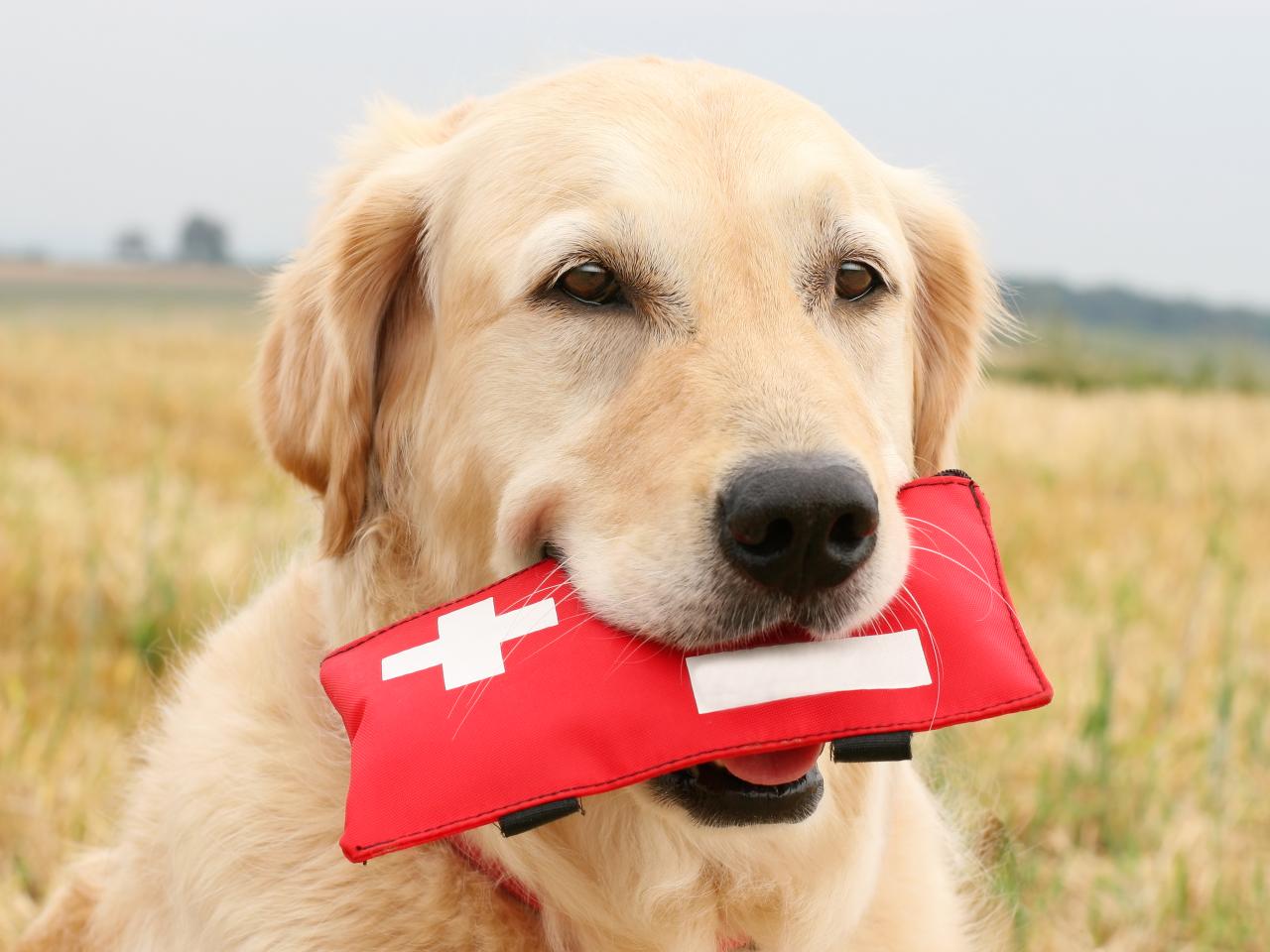
A dog first aid kit is most useful when it is simple, organized, current, and easy to reach. You do not need to turn a closet into a veterinary clinic. You need enough basic supplies and information to manage the first few minutes of an injury, transport your dog safely, and communicate clearly with a veterinarian.
The Merck Veterinary Manual is explicit about the limit: a first aid kit is not a substitute for veterinary care. Think of the kit as a bridge between “something happened” and professional help—not permission to diagnose or treat a serious problem at home.
Start with information, not bandages
In an emergency, the phone numbers and records you need can matter as much as the gauze.
Keep a waterproof card or pouch with:
- your regular veterinarian’s name and phone number;
- the nearest emergency veterinary hospital you would realistically use;
- your dog’s current medications and important medical conditions;
- vaccination and relevant medical records;
- your dog’s microchip information, if applicable;
- a recent photo of your dog and a photo of you together.
The American Red Cross includes medical records, medications, current photos, veterinary contact information, and feeding or medical instructions in its pet preparedness guidance. Keeping a digital copy on your phone or secure cloud storage is useful too, but a physical copy gives you a backup when power, signal, or battery life is unreliable.
For Miami households, this information layer also fits directly into hurricane planning. Miami-Dade County recommends keeping pet carriers, leashes, shot records, and food with emergency supplies, while the City of Miami emphasizes current identification, photos, microchip information, and advance evacuation planning.
Pack the basic wound-care tools
A practical kit should give you clean materials for temporary wound protection and basic handling. Merck and the American Veterinary Medical Association include many of the same core items in their pet first-aid guidance.
A sensible starting set includes:
- disposable gloves;
- sterile gauze pads and rolled gauze;
- non-adherent pads;
- self-cling or stretch bandage material;
- medical adhesive tape;
- blunt-ended scissors;
- tweezers or forceps;
- sterile saline;
- a clean towel or cloth;
- a digital thermometer intended for appropriate pet use, with lubricant if required;
- a flashlight.
Store everything in a sturdy container that closes securely. A transparent pouch or labeled compartments can make supplies easier to identify quickly.

Keep first-aid supplies organized separately from everyday pet gear so they are easy to find under pressure.
The goal is not to pack every medical product you can find. It is to know what is in the kit and how it is meant to be used. The Red Cross also offers pet first-aid training and an app with emergency guidance; learning before an emergency is far more useful than trying to interpret unfamiliar supplies while your dog is hurt.
Add safe transport and restraint essentials
First aid often ends with transportation to veterinary care, so your kit should account for moving the dog safely.
Keep an extra leash and, where practical, a properly fitted harness or carrier nearby. A towel or blanket can help with warmth, cleanup, or moving a dog, depending on the situation. The Red Cross recommends sturdy leashes, harnesses, or carriers as part of pet emergency preparation.
A frightened or painful dog may bite even if that behavior is completely out of character. Some authoritative first-aid lists therefore include a muzzle. But a muzzle is not appropriate in every emergency—especially when a dog is vomiting or having trouble breathing—and it should never become a reason to delay urgent veterinary transport. Learn safe handling from a veterinarian or reputable pet first-aid course before you need it.
Be careful with medications and home remedies
This is where a conservative kit is safer than an overstuffed one.
Do not add human pain relievers or miscellaneous medications with the idea that you will decide on a dose during an emergency. Merck advises checking with a veterinarian before giving over-the-counter medication, and even a dog’s regular prescription may require veterinary direction during an emergency.
Some traditional pet first-aid lists contain products that are useful only in specific circumstances. For example, inducing vomiting after a possible poisoning is not a universal first-aid step. The correct response depends on what was swallowed, the dog’s condition, and other factors. Contact a veterinarian or animal poison-control resource for case-specific instructions instead of improvising.
A useful rule for the medication section of your kit is simple: if your veterinarian has not told you why, when, and how to use it for your dog, do not treat the emergency kit as authorization to administer it.
Keep a smaller version ready for the car or trail
The home kit can be more complete. A travel kit should prioritize what you are most likely to need before reaching help: contact information, gauze, non-adherent pads, wrap, gloves, saline, tweezers, scissors, a towel, flashlight, and an extra leash.
Add drinking water and a collapsible bowl for normal travel needs. If your dog takes prescription medication, plan how required doses will travel safely rather than assuming you can replace them easily away from home.
This is especially useful for road trips, parks, hikes, beach days, and hurricane-season travel when normal routines can change quickly. Pair the compact kit with the outdoor risks relevant to the day—for example, our hot-pavement walking guide for South Florida heat or our snake-safety guide for outdoor wildlife encounters.
Know what the kit cannot fix
A stocked bag does not make a serious emergency minor. Difficulty breathing, collapse, uncontrolled bleeding, severe trauma, seizures, suspected poisoning, heatstroke, snakebite, and other significant problems require prompt professional guidance and often immediate veterinary care.
Call ahead when possible so the veterinary team knows what happened and can prepare for your arrival. If you are unsure whether a situation is urgent, contacting a veterinarian is safer than waiting for a symptom checklist to become complete.

First aid can help during the trip to professional care, but it does not replace veterinary evaluation and treatment.
Photo by Alexander MassSource: Unsplash
First aid is most valuable when it supports that handoff: protect yourself and your dog, perform only measures you understand and that are appropriate to the situation, and get the dog to the level of care they need.
Maintain the kit like any other safety equipment
A kit assembled once and forgotten for three years is not ready.
Set a recurring household reminder to inspect it. Check expiration dates, replace opened or damaged sterile supplies, confirm that batteries work, update medical records and medication lists, and make sure emergency veterinary contact information has not changed. Merck recommends checking medication expiration dates at least annually.
Restock anything you use immediately. If the kit travels in a car, also consider how Florida heat can affect medications or temperature-sensitive supplies; follow storage instructions and ask your veterinarian how to transport prescription medication safely.
First aid belongs inside the bigger emergency plan
For a Miami pet household, the best first aid kit is one part of a larger readiness system. Your Hurricane Preparedness for Dogs guide can hold the evacuation layer—food, water, identification, records, medications, transport, and destination planning—while the first aid kit handles immediate injury supplies.
That distinction keeps both kits practical. You can grab the first-aid pouch for a normal road trip without carrying the entire hurricane supply bin, while still knowing exactly where the larger emergency setup is stored.
Maxi Pawz is a Miami pet brand with nationwide availability, so this guide is designed to travel well beyond South Florida. The local risks may change, but the preparation principle does not: organize the essentials before you need them, know the limits of first aid, and keep professional veterinary care at the center of the emergency plan.
For equipment used around your dog, also review our pet product safety guidance and follow manufacturer instructions for storage, inspection, and replacement.
Sources & further reading
These references were used to support or expand the information in this article. External guidance can change over time, so check the linked source for the latest details.
- 1. Merck Veterinary Manual. First Aid Kit for a Pet — accessed Aug 25, 2026
- 2. American Red Cross. Pet Disaster Preparedness & Recovery — accessed Aug 25, 2026
- 3. American Red Cross. First Aid for Dogs — accessed Aug 25, 2026
- 4. American Veterinary Medical Association. Pet First Aid Kit Checklist — accessed Aug 25, 2026
- 5. Miami-Dade County. Kits & Checklists — accessed Aug 25, 2026
- 6. City of Miami. Pet Preparedness — accessed Aug 25, 2026
Continue Learning
Related Maxi Pawz guides

Storm & Emergency Safety
Hurricane Preparedness for Dogs: Emergency Kit & Evacuation Checklist
Build a practical hurricane plan for your dog with an emergency kit, current identification, pet-friendly evacuation options, a safe indoor setup, and post-storm precautions.
Read guide
Miami Dog Safety
Snake Safety for Dogs in Florida: Prevention and What to Do After a Bite
Learn practical ways to reduce snake encounters with your dog in Florida, recognize when a possible bite is an emergency, and know what to do on the way to veterinary care.
Read guide
Miami Dog Safety
Hot Pavement and Dogs in Miami: Best Walking Times & Paw Safety
Plan safer dog walks in Miami heat with practical guidance for hot pavement, cooler walking times, surface checks, shade, water breaks, paw protection, and heat warning signs.
Read guide