

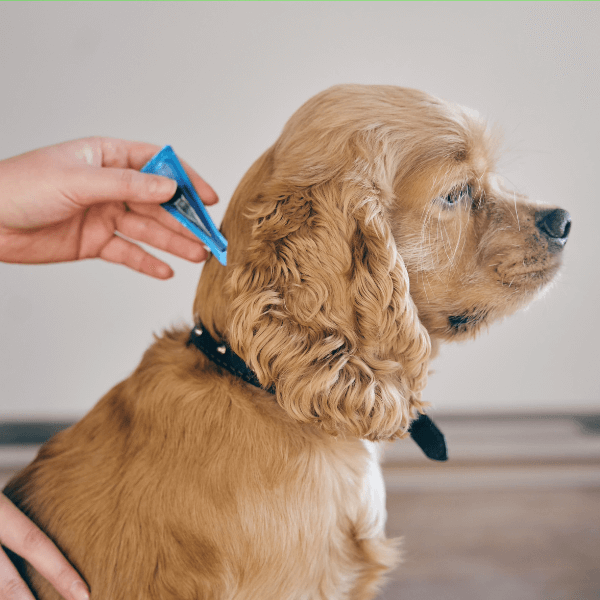
Florida’s warm, humid weather changes the way dog owners should think about fleas and ticks. Instead of treating parasite control as a short spring-and-summer project, build it into the dog’s normal year-round care routine. University of Florida IFAS Extension notes that fleas, ticks, and mosquitoes are year-round threats to pets in Florida, and that flea and tick populations remain healthy through much of the year.
The practical routine has several layers: work with your veterinarian on an appropriate preventive, use every product exactly as labeled, check your dog after outdoor time, keep bedding and resting areas clean, and respond promptly when you find a parasite. No single layer replaces the others.
Start with a veterinarian-guided prevention plan
Flea and tick products come in different forms, including oral medications, topical products, collars, shampoos, and sprays. That variety is useful, but it also means there is no responsible one-size-fits-all recommendation for every dog.
UF/IFAS advises pet owners to consult a veterinarian when choosing pest-control products because an animal’s species, age, health, sensitivities, household, and other medications can affect what is appropriate. Some topical and collar products are pesticides and should be treated with the same respect as any other labeled pest-control product.
Before starting or changing a preventive, ask your veterinarian what makes sense for your individual dog and lifestyle. Then keep the schedule consistent rather than waiting until you notice scratching or a tick.
Read the label every time
Familiar packaging can make a product feel routine, but the label still matters. Confirm that the product is intended for your dog’s species, age, and weight range; follow application and dosing directions; and pay attention to warnings about bathing, contact with other pets, or combining products.
Never assume that a product intended for dogs is automatically safe for cats or other animals in the household. The ASPCA specifically warns that some flea products formulated for dogs can cause serious reactions when incorrectly applied to cats.
If you are uncertain about a product, an active ingredient, or whether two preventives can be used together, ask your veterinarian before experimenting.

After grass, brush, parks, or yard time, a quick hands-on check can help you notice ticks and other hitchhikers sooner.
Make the post-walk tick check automatic
Florida’s parks, yards, grassy edges, brush, and outdoor recreation create plenty of opportunities for contact with ticks. UF/IFAS notes that ticks can be found throughout the year in Florida, although abundance varies by life stage and season.
After time in grass, brush, wooded areas, or other tick habitat, slowly run your hands over your dog’s body and part the coat when you feel a small bump. Give extra attention to areas that are easy to overlook: around and inside the ears, under the collar, under the front legs, around the groin, between the toes, and near the tail.
A quick inspection pairs naturally with the paw check already useful after wet Miami walks. Our rainy-season paw-care guide shows how to make cleaning, drying, and inspection one repeatable routine rather than several separate chores.
If you find a tick, remove it promptly and carefully
Do not wait for an attached tick to fall off on its own. UF/IFAS and CDC guidance emphasizes prompt identification and removal.
Using fine-tipped tweezers or an appropriate tick-removal tool, grasp the tick close to the skin and pull upward with steady pressure rather than crushing it with bare fingers. Clean the bite area and your hands afterward. If you cannot remove the tick safely, part remains embedded, the area becomes irritated, or your dog becomes unwell, contact your veterinarian.
Avoid folk remedies intended to make an attached tick detach. A straightforward mechanical removal is easier to control, and veterinary guidance should take priority when the situation is uncertain.
Fleas require attention to the dog and the environment
Fleas are not simply a coat problem. Once established, their life cycle can involve the dog’s bedding, carpets, furniture, resting spaces, and other areas where the pet spends time.
UF/IFAS recommends a coordinated approach when a flea infestation is present. Regular vacuuming, washing pet bedding, cleaning frequently used areas, and veterinarian-directed treatment of the pet can all be part of the response. More persistent infestations may justify advice from a licensed pest-management professional.
Do not spray a household or yard pesticide directly on your dog unless that exact product is labeled for use on the animal. Keep pets away from treated areas according to label instructions.

Outdoor play does not need to disappear from the routine; prevention, inspection, and thoughtful habitat choices work together.
Photo by David BeckerSource: Unsplash
Make the yard less welcoming to ticks
You do not need to turn a Florida yard into bare ground to reduce exposure. Recent UF/IFAS guidance recommends practical habitat management: clear dense vegetation along frequently used paths, keep heavily used seating or play areas away from brushy edges when possible, manage leaf litter and hiding places, and avoid encouraging wildlife around pet areas.
For dog owners, the goal is not a mythical “tick-free” outdoors. It is to reduce the most favorable habitat around the places your family and dog use most, while maintaining prevention and checks.
If a property has a persistent tick problem, especially around kennels or areas where dogs repeatedly rest, a licensed pest-control professional can help identify habitat and treatment options appropriate to the property.
Grooming is also inspection time
Routine brushing is useful beyond coat appearance. It gives you repeated chances to notice flea dirt, unusual scratching, irritated skin, scabs, attached ticks, or changes that deserve a closer look.
Our dog grooming and everyday care guide covers a broader skin, coat, ear, nail, and paw routine. When grooming becomes familiar and calm, parasite checks are easier because you already know what your dog’s normal skin and coat feel like.

Regular handling and inspection make it easier to notice changes in your dog's coat, skin, and paws.
Photo by Unsplash contributorSource: Unsplash
Know when itching needs more than parasite control
Scratching does not automatically mean fleas. Skin allergies, infections, environmental irritation, and other conditions can produce similar signs. Likewise, finding a flea does not prove that every skin problem is caused by fleas.
Contact your veterinarian when itching is persistent or intense, when the skin is broken or infected-looking, when there is significant hair loss, or when your dog develops broader signs of illness. After a known tick bite, mention the exposure if your dog later becomes unwell so the veterinarian has the full context.
A practical Florida routine
For most households, consistency matters more than turning parasite prevention into a complicated project:
- keep the veterinarian-recommended preventive on schedule;
- check the product label before every use;
- inspect your dog after higher-exposure outdoor activities;
- wash bedding and clean favorite resting areas routinely;
- keep heavily used yard areas reasonably clear of dense tick habitat;
- remove attached ticks promptly and correctly;
- contact your veterinarian when symptoms, product reactions, or removal problems need professional attention.
Florida dogs should still enjoy grass, parks, yards, walks, and outdoor adventures. The goal is not to avoid the outdoors—it is to make parasite awareness part of the same preparation you already use for Florida water safety, heat, hydration, and weather.
For any flea or tick product you bring into that routine, also review our broader pet product safety guidance and follow the manufacturer’s current instructions.
Sources & further reading
These references were used to support or expand the information in this article. External guidance can change over time, so check the linked source for the latest details.
- 1. University of Florida IFAS Extension. Fleas, Ticks, and Mosquitoes, OH MY! — accessed Aug 23, 2026
- 2. University of Florida IFAS Extension. Pets and Pesticides: Benefits and Potential Risks — accessed Aug 23, 2026
- 3. University of Florida IFAS Extension. Ticks & Disease in Florida — accessed Aug 23, 2026
- 4. University of Florida IFAS Extension. How to Manage Ticks in Your Florida Yard — accessed Aug 23, 2026
- 5. ASPCA. Keep Your Pets Safe from Fleas and Ticks — accessed Aug 23, 2026
- 6. Centers for Disease Control and Prevention. Tickborne Diseases of the United States: A Reference Manual — accessed Aug 23, 2026
Continue Learning
Related Maxi Pawz guides

Miami Dog Safety
Rainy-Season Dog Paw Care in Miami: Clean, Dry & Check After Walks
Build a simple post-walk paw routine for Miami's rainy season: rinse away grime when needed, dry between the toes, inspect pads and nails, and know when irritation deserves veterinary attention.
Read guide
Miami Dog Safety
Dog Water Safety in Florida: Pools, Beaches & Algae Blooms
Plan safer Florida water days with your dog, from gradual swim introductions and life jackets to beach rules, fresh drinking water, algae-bloom checks, rinsing, and post-swim care.
Read guide
Grooming & Care
Dog Grooming Tools and Everyday Care Routines
Learn how to introduce dog grooming tools through brief, predictable routines while choosing products for the intended coat, task, body area, and comfort level.
Read guide